
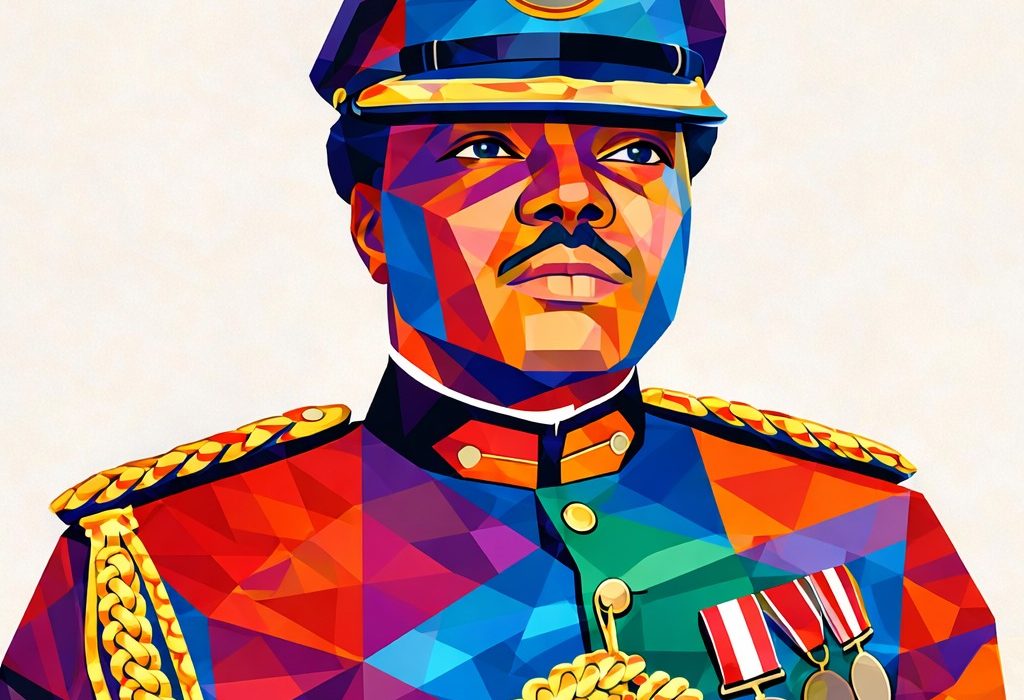
From February 13 to March 13, 2026, the Nigerian Institute of International Affairs in Lagos hosts a landmark exhibition titled Murtala Ramat Muhammed: Life, Leadership and Legacy. Presented by the Murtala Muhammed Foundation and curated by Seun Alli, the exhibition commemorates the golden jubilee of the passing of one of Nigeria’s most influential military leaders and reformists.
A Personality That Reshaped a Nation
Murtala Ramat Muhammed remains etched in Nigeria’s collective memory as a bold, decisive, and reform-driven leader. Known for his swift policy actions and uncompromising stance against corruption, his brief tenure as Head of State (1975–1976) marked a turning point in Nigeria’s political culture. His leadership style was direct, disciplined, and people-focused which earned him both admiration and controversy, yet solidified his reputation as a patriot committed to national unity and administrative efficiency.
The exhibition captures these facets of his personality, presenting him not merely as a soldier-statesman but as a complex figure whose personal convictions shaped public policy. Through archival photographs, interpretive displays, and contextual storytelling, visitors encounter the man behind the uniform: principled, austere, and driven by an urgent vision for a better Nigeria.
Beyond Memorial: An Educational Encounter
Rather than a static tribute, the exhibition is conceived as an immersive educational experience. It invites younger generations, many born decades after his assassination to engage with Nigeria’s post-independence history and reflect on the qualities of leadership that remain relevant today.
By situating his life within broader national and global contexts, the showcase encourages dialogue about governance, civic responsibility, and the enduring quest for accountability in public service.
Why This Exhibition Matters Now
In a time when conversations about leadership and national direction dominate public discourse, revisiting the legacy of Murtala Ramat Muhammed offers both inspiration and critical reflection. His story challenges Nigerians to consider what decisive leadership looks like and how integrity, courage, and service can shape a nation’s trajectory.
Open Monday through Saturday from 10:00 a.m. to 6:00 p.m., the exhibition is free to attend, making it accessible to students, scholars, and the general public alike. More than a historical retrospective, it is a call to remember, to learn, and to reimagine the possibilities of principled leadership in Nigeria.