
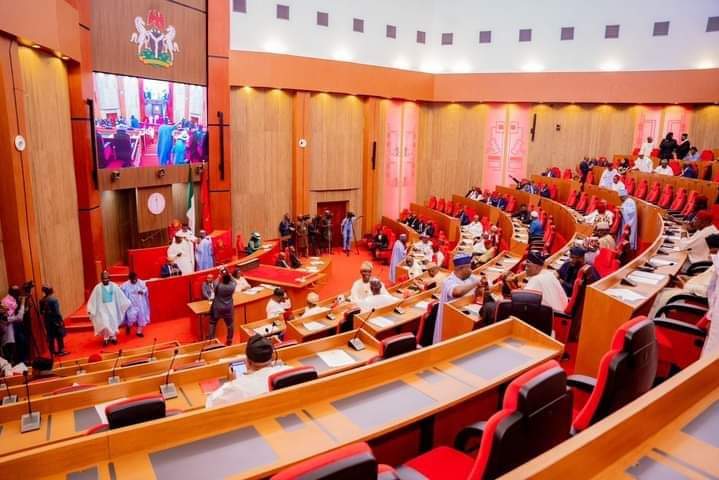
The Nigerian Senate will on Tuesday hold an emergency plenary session following mounting public outrage over amendments to the Electoral Act, particularly the removal of the clause mandating real-time electronic transmission of election results.
The extraordinary sitting comes barely a week after the passage of the Electoral Act (Repeal and Re-enactment) Amendment Bill, 2026, a move that has drawn sharp criticism from civil society groups, labour unions, opposition figures, professional bodies, regional leaders, and youth-led movements across the country.
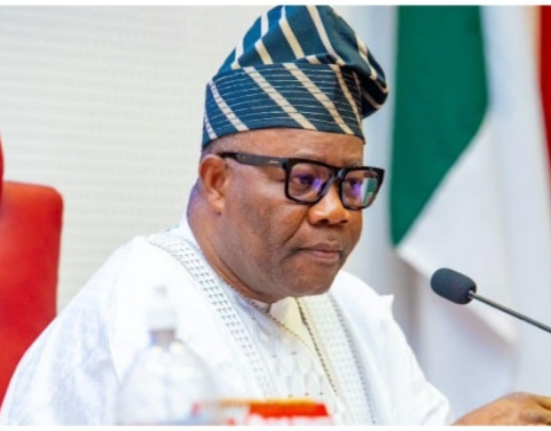
The session, scheduled to commence at noon, was announced in a statement issued on Sunday by the Clerk of the Senate, Emmanuel Odo, and will be presided over by Senate President, Godswill Akpabio. A total of 105 senators are expected to attend, following the recent reduction in the chamber’s membership due to deaths and appointments.
Public backlash has intensified since lawmakers deleted the phrase “real-time” from provisions relating to the electronic transmission of election results, a decision critics argue creates loopholes for manipulation during collation. Despite assurances from Senate leaders that electronic transmission was not entirely discarded, scepticism has continued to grow nationwide.
Sources within the National Assembly disclosed that several senators, particularly members of the harmonisation committee, were inundated with angry calls, messages, and threats after their phone numbers circulated on social media. Some lawmakers reportedly switched off their phones to avoid harassment.
Meanwhile, pressure has spilled onto the streets. On Monday, a coalition of political activists under the banner Movement for Credible Elections staged a mass protest at the National Assembly complex, tagged “Occupy NASS.” The demonstration gained momentum when former Labour Party presidential candidate, Peter Obi, joined hundreds of protesters demanding the restoration of mandatory real-time electronic transmission of results ahead of the 2027 general elections.
Chanting solidarity songs and waving placards reading “Our votes must count,” “No to electoral robbery,” and “Protect democracy now,” the protesters marched from the Federal Secretariat towards the National Assembly. Security operatives from the Nigeria Police Force, Nigerian Army, and Nigeria Security and Civil Defence Corps barricaded the complex, preventing access.
Addressing journalists at the protest ground, Obi warned against what he described as the steady erosion of Nigeria’s democratic gains, urging lawmakers to prioritise electoral credibility.
As protests unfolded outside, civil society organisations intensified advocacy within institutional spaces. Groups including the Kukah Centre, Yiaga Africa, TAF Africa, International Press Centre, Nigerian Women Trust Fund, and Elect Her issued a two-week ultimatum to the National Assembly to conclude the amendment process and retain mandatory real-time electronic transmission of results. They also called on the Independent National Electoral Commission to release the timetable for the 2027 general elections.
Speaking on behalf of the coalition, TAF Africa’s Founder and CEO, Jake Epelle, urged lawmakers to approach the harmonisation process with national interest and democratic accountability rather than partisan considerations.
Yiaga Africa’s Director of Programmes, Cynthia Mbamalu, described the Senate’s position as legislative backsliding, noting that the electoral commission had previously confirmed its capacity to transmit results electronically.
The Nigeria Labour Congress has also warned of nationwide protests and possible election boycotts if lawmakers fail to take an unambiguous position.
Adding to the pressure, the Nigerian Guild of Editors cautioned that the controversy was breeding mistrust in the electoral process and could dampen voter participation. Regional leaders under the Southern and Middle Belt Leadership Forum similarly warned against any weakening of electoral safeguards, describing the development as unacceptable in a democratic legislature.
As the Senate reconvenes, Nigerians across political, civic, and generational lines are watching closely, with many viewing the emergency plenary as a critical test of the National Assembly’s commitment to electoral transparency and democratic integrity.