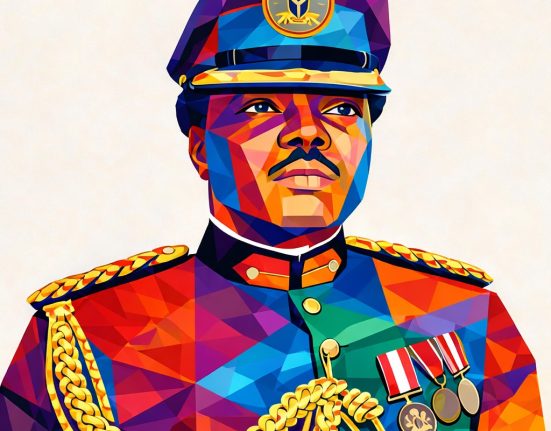

History is often unkind to brevity. Leaders who do not stay long enough are usually remembered as footnotes, interrupted before their ideas could mature. General Murtala Ramat Muhammed defies that pattern. Half a century after his assassination, he remains one of Nigeria’s clearest reference points for what decisive leadership can look like, even when time is scarce.
For younger Nigerians, his story is unfamiliar in a specific way. It is not the story of a long reign, a gradual reformer, or a complicated legacy stretched over decades. It is the story of speed, intent, and consequence. In six months, Muhammed reset expectations of governance at home and repositioned Nigeria abroad, leaving behind a standard that has proven difficult to replicate.
As Nigeria approaches the 50th anniversary of his death on February 13, 2026, that standard is being re-examined not as nostalgia, but as context. In an era marked by delayed reforms and incremental promises, Muhammed’s tenure offers a counterfactual: what happens when leadership acts with urgency and moral cainty.
That examination is being led in part by his daughter, Dr. Aisha Muhammed Oyebode, through the work of the Murtala Muhammed Foundation. For her, legacy is not about defending her father’s memory; it is about interrogating its relevance.
She has never framed his assassination in 1976 as a reason for disillusionment. Instead, she speaks of Nigeria as the country that shaped her life and gave meaning to her father’s sacrifice.
“His loss was painful,” she said in an interview with THISDAY. “But I never doubted that his sacrifice was worth it. Nigeria has made me everything that I am.”
It is a statement that lands differently today, at a time when many young Nigerians view the state less as a promise than as an obstacle.
Muhammed assumed office in 1975 at a moment of national drift. His response was not caution but clarity. His government moved swiftly toward a transition to civilian rule, confronted corruption openly, and sought to restore discipline in public life. The methods were firm, sometimes controversial, but the signal was unmistakable: governance was not a performance; it was a responsibility.
Internationally, his approach was even more defining. He rejected the careful neutrality that had characterised much of Nigeria’s diplomacy and replaced it with unapologetic African alignment. His declaration that “Africa has come of age,” delivered at the Organisation of African Unity, was less a speech than a repositioning. Nigeria would no longer hedge its interests through external approval.
For Oyebode, that moment captures something missing in contemporary leadership: the willingness to absorb cost in defence of principle.
During a recent visit to Angola, where she accepted an award on behalf of her father, she was reminded of Nigeria’s past readiness to act in solidarity with other African nations—even when it carried economic consequences.
“Nigeria was able to tell global powers that if their companies left Angola, they would have to leave Nigeria too,” she recalled.
That posture, she believes, resonates with a generation navigating global systems that often feel extractive rather than equitable.
Yet the benchmark Muhammed set was not limited to foreign policy. It extended into everyday governance and personal values. Discipline, Oyebode argues, was not enforced as spectacle; it was embedded as expectation. Integrity was not idealised; it was practised.
“There was a time when ordinary things could be done without inducements,” she said.
This is not framed as a moral golden age, but as evidence that institutional culture can change when leadership sets clear boundaries. Nigerians, she notes, continue to excel wherever systems reward merit and focus—proof that capacity has never been the problem.
Education formed the quiet backbone of Muhammed’s worldview. He believed in universal access to education and was particularly committed to the education of girls. Before his death, he instructed his wife to ensure that his children were educated, regardless of circumstance.
That belief now shapes the work of the Murtala Muhammed Foundation, which focuses on education, women’s empowerment, scholarships, and support for displaced communities.
“When you have an education,” Oyebode said, “there is almost nothing you cannot do.”
In a period increasingly defined by visibility and accumulation, she also returns to a less fashionable value her father embodied: contentment. Not as restraint, but as self-definition, the ability to measure success beyond wealth.
“You are greater if you have a voice, if you can stand for others, and if you are proud of your own labour,” she said.
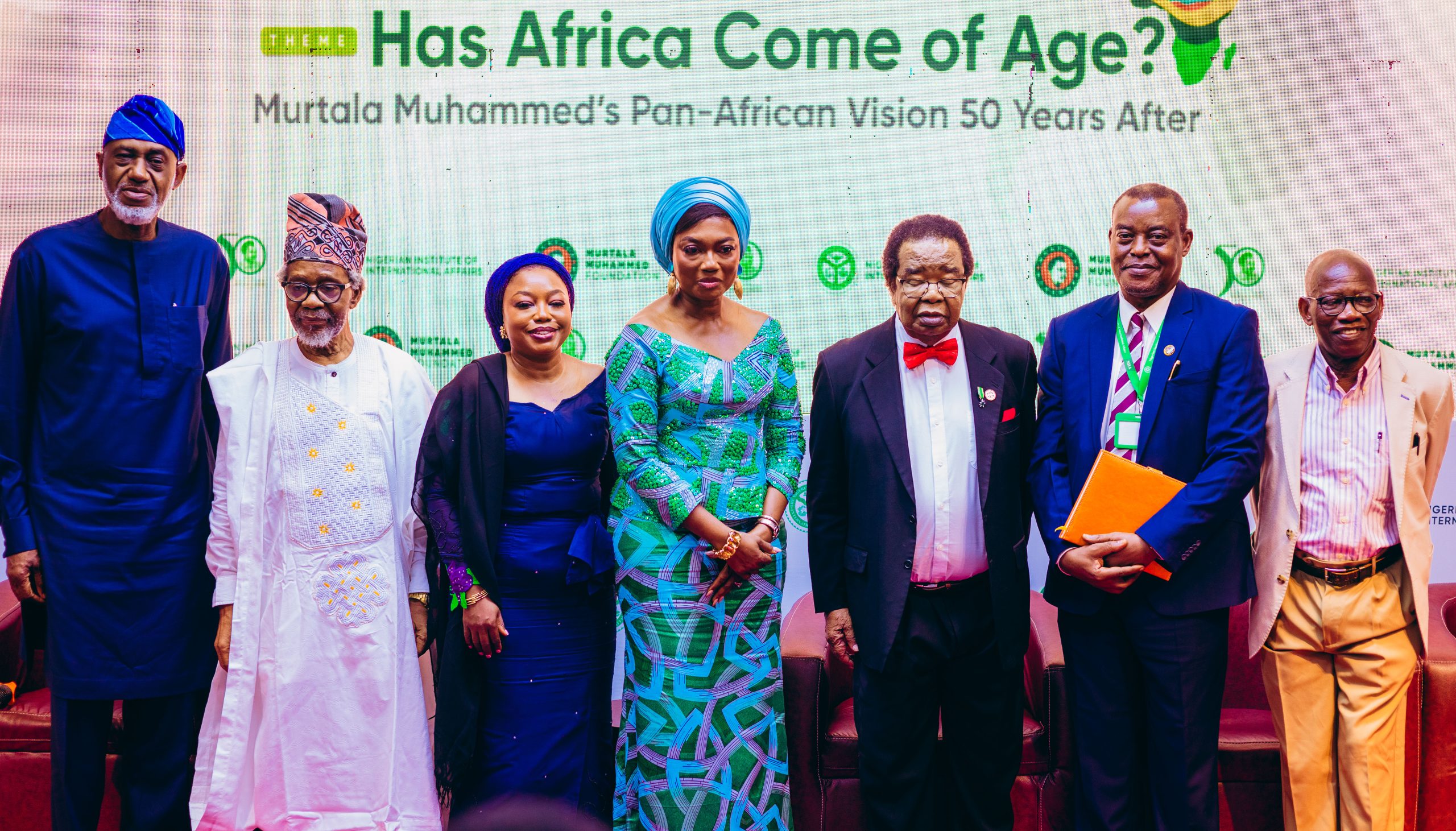
The 50th-anniversary commemorations will include exhibitions, international conferences, new publications on Muhammed’s foreign policy, and public engagement across Lagos, Abuja and Kano. In partnership with the Nigerian Institute of International Affairs, an international colloquium will revisit Africa’s place in the world and Nigeria’s role within it.
Professor Eghosa Osaghae, Director-General of the NIIA, describes Muhammed as a leader who reshaped Nigeria’s external engagement, noting that the principle of Africa as the centrepiece of Nigeria’s foreign policy traces directly to his tenure.
But the anniversary is not framed as closure. It is framed as comparison.
Fifty years on, Murtala Muhammed’s legacy endures less as a monument than as a measuring line, a reminder that leadership can be swift, values can be operational, and national confidence can be deliberate.
For a generation deciding whether to invest in the future of this country or exit it, that may be the most uncomfortable and useful inheritance of all.